
Life is beautiful. See it!
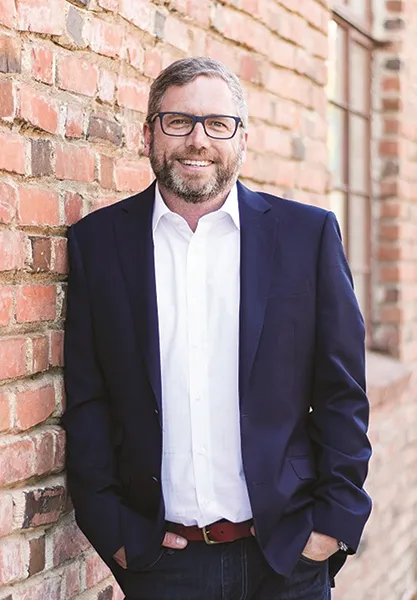
"There is joy in vision — effortless, constant, and so easily taken for granted.
We do not appreciate the gift of sight until it begins to slip away — quietly, cruelly, at the very center of our gaze. Dry age-related macular degeneration (AMD) does not announce itself loudly. It erases. A face becomes a blur. A sunrise loses its fire. The smile of a grandchild fades into the periphery. The world we’ve always seen becomes, slowly, a memory.
My name is Dr. B. For 25 years, I have practiced ophthalmology. I have looked into the eyes of thousands of patients — friends, family, members of my community — and delivered news that no one should have to hear. I have watched this disease steal what matters most. And for too long, I had nothing to offer but careful monitoring and quiet grief.
That era is over.
PhotoBioModulation (PBM) is not simply a new therapy; it is a turning point. For the first time, we have a tool — real, evidence-based, and available now — to fight dry AMD on its own terms. PBM slows it, interrupts it, and gives people back the clarity, color, and beauty of the visual world they were losing.
The Macular Preservation Institute (MPI) was built for this moment.
MPI exists to deploy this breakthrough at scale — across communities, across populations — through a growing network of institutes, each committed to serving patients with clinical excellence and an environment worthy of the people who walk through our doors.
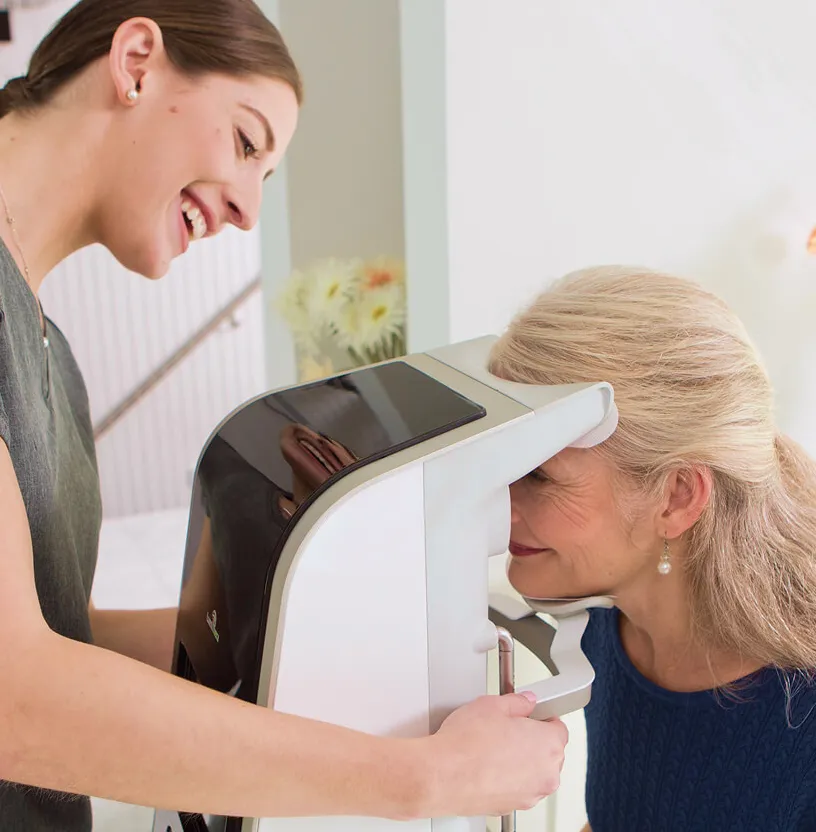
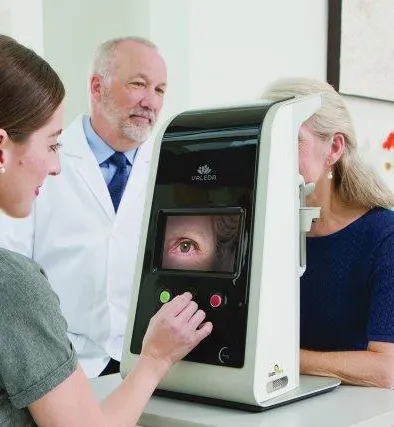
We value our patients’ time as much as our own. All it takes is a five-minute treatment per eye, with 27 or more visits per year, to achieve meaningful changes in one’s vision. We endeavor to make each of those visits efficient and even joyful by offering a calming aesthetic and a seamless, respectful experience that honors the commitment our patients make.
We are more than a treatment center. MPI is a knowledge platform, an advocacy engine, and a research institution — educating patients on everything available to protect their retinal health, and actively sponsoring the science that will make what we do even better.
I have built practices from the ground up — from one physician to more than 25 — and from a few thousand patient visits a year to hundreds of thousands. I know how to scale. I know how to build systems that serve people with consistency and heart. I bring all of that — every lesson, every insight, every hard-won instinct — to this mission.
I do it because this is not just a business. This is personal. I have watched too many people lose their vision. I will not watch that happen when I finally have something to offer.
We will reach every patient we can. AMD doesn’t discriminate — and neither do we. We will treat them with excellence. We will pursue this work without reservation, because anything less is simply not who we are.
Our legacy will be measured in vision that isn’t lost, in independence preserved, in the faces our patients will still recognize, and in the beauty of the world around them — the alpine lakes, the birds in flight, the children laughing — that they will still be able to see.
We are energized. We are ready. And we are just beginning.
Life is beautiful. See it.
-J. Isaac Barthelow, M.D.
Board Certified Ophthalmologist

Life is beautiful. See it!
"There is joy in vision — effortless, constant, and so easily taken for granted.
We do not appreciate the gift of sight until it begins to slip away — quietly, cruelly, at the very center of our gaze. Dry age-related macular degeneration (AMD) does not announce itself loudly. It erases. A face becomes a blur. A sunrise loses its fire. The smile of a grandchild fades into the periphery. The world we’ve always seen becomes, slowly, a memory.
My name is Dr. B. For 25 years, I have practiced ophthalmology. I have looked into the eyes of thousands of patients — friends, family, members of my community — and delivered news that no one should have to hear. I have watched this disease steal what matters most. And for too long, I had nothing to offer but careful monitoring and quiet grief.
That era is over.
PhotoBioModulation (PBM) is not simply a new therapy; it is a turning point. For the first time, we have a tool — real, evidence-based, and available now — to fight dry AMD on its own terms. PBM slows it, interrupts it, and gives people back the clarity, color, and beauty of the visual world they were losing.
The Macular Preservation Institute (MPI) was built for this moment.
MPI exists to deploy this breakthrough at scale — across communities, across populations — through a growing network of institutes, each committed to serving patients with clinical excellence and an environment worthy of the people who walk through our doors.
We value our patients’ time as much as our own. All it takes is a five-minute treatment per eye, with 27 or more visits per year, to achieve meaningful changes in one’s vision. We endeavor to make each of those visits efficient and even joyful by offering a calming aesthetic and a seamless, respectful experience that honors the commitment our patients make.
We are more than a treatment center. MPI is a knowledge platform, an advocacy engine, and a research institution — educating patients on everything available to protect their retinal health, and actively sponsoring the science that will make what we do even better.
I have built practices from the ground up — from one physician to more than 25 — and from a few thousand patient visits a year to hundreds of thousands. I know how to scale. I know how to build systems that serve people with consistency and heart. I bring all of that — every lesson, every insight, every hard-won instinct — to this mission.
I do it because this is not just a business. This is personal. I have watched too many people lose their vision. I will not watch that happen when I finally have something to offer.
We will reach every patient we can. AMD doesn’t discriminate — and neither do we. We will treat them with excellence. We will pursue this work without reservation, because anything less is simply not who we are.
Our legacy will be measured in vision that isn’t lost, in independence preserved, in the faces our patients will still recognize, and in the beauty of the world around them — the alpine lakes, the birds in flight, the children laughing — that they will still be able to see.
We are energized. We are ready. And we are just beginning.
Life is beautiful. See it.
-J. Isaac Barthelow, M.D.
Board Certified Ophthalmologist
learn more about AMD and PBM
Attend a Free Seminar
Experiencing better vision is easier than you might think. Attend one of our free Macular Degeneration and PhotoBiomodulation seminars in person or online. Each seminar offers an in-depth look at the disease and how the Valeda system can turn back the clock. Seminars also include an opportunity to speak with one of our ophthalmologists to ensure all of your questions are answered.
Treatments have been successfully performed worldwide. We look forward to matching that number right here at home.
Individuals suffering from age-related macular degeneration have recovered a significant amount of their vision.
Sessions over 3-5 weeks is all it takes to get started. Each visit is quick, painless, and easy to fit into any schedule.
Join us in our journey to repair vision loss in Northern California caused by age-related macular degeneration.
Join us in our journey to repair vision loss in Northern California caused by age-related macular degeneration.
Frequently asked questions about macular degeneration
What are the early symptoms of AMD?
Common early signs include blurred central vision, difficulty reading, needing brighter light, and trouble recognizing faces.
Can AMD cause complete blindness?
AMD typically does not cause total blindness, as it affects central vision. Peripheral (side) vision usually remains intact.
Who is at risk for developing AMD?
Risk increases with age, especially over 50. Other factors include genetics, smoking, poor diet, and prolonged sun exposure.
How quickly does AMD progress?
Dry AMD often progresses slowly over years, while wet AMD can worsen rapidly—sometimes in weeks or months—if left untreated.
Is there a cure for AMD?
There is currently no cure, but treatments like photobiomodulation (PBM) and lifestyle changes can help slow progression and preserve vision.
Are there treatments for wet AMD?
Wet AMD is often treated with anti-VEGF injections, which help reduce abnormal blood vessel growth and leakage in the eye.
Can lifestyle changes help AMD?
A healthy diet rich in greens, quitting smoking, wearing sunglasses, and taking supplements can support eye health.
When should I see an eye doctor?
PBM therapy has a billing code (CPT 0936T), but coverage varies. Ask your provider's office about your plan and any out-of-pocket costs before starting.